You step outside with your coffee, look across the lawn and notice it: a flattened path to the patio, leaves tucked between the blades, or that familiar dog smell returning as the afternoon warms up. The grass is still green. It just needs some attention.
If you bought artificial turf to spend less time working in the yard, you probably don’t want another complicated weekend project. Fortunately, routine artificial turf maintenance starts with a few ordinary tools and a sensible sequence. Here’s how to clean your artificial grass yourself, what to look for along the way, and when extra equipment—or an experienced installer—can help.

Start with dry debris removal before adding water or cleaning products.
The short version: clear, brush, rinse and inspect
Pick up solid waste and loose debris, gently lift flattened fibers, collect anything the brush loosens, and rinse dirty areas with a garden hose. Treat spills or pet areas with a cleaner approved for your turf, following that product’s directions. Finish by checking seams, edges and drainage.
That routine handles a lot of everyday care. It won’t repair a separating seam, reverse melted fibers or solve a drainage problem underneath the lawn. Start by working out which problem you actually have.
1. Walk the yard before you clean it
Move toys and lightweight furniture, then walk from one end of the lawn to the other. Look closely beside gates, along fences, around drains and anywhere people or pets repeatedly travel. Take a few phone photos so you can compare the same areas afterward.
- Surface buildup: leaves, hair, food, dust or soil caught between the blades.
- Flattening: fibers lying down along a walking route or beneath furniture.
- Infill changes: granules piled in one spot, unusually exposed backing or an uneven feel.
- Installation concerns: lifting edges, opening seams, wrinkles, loose fasteners or persistent puddles.
Cleaning can improve the first two. The others may need a closer assessment before you use a powered brush or direct water at them. Don’t tug an open seam or try to wash a low spot flat. Keep people away from exposed sharp fasteners and contact your installer.
2. Put together a simple turf-cleaning kit
For a typical home lawn, start with gloves, waste bags, a firm synthetic-bristle turf broom, a garden hose with an adjustable spray nozzle, a bucket and a soft cloth or sponge. A leaf blower is useful if trees drop debris. Add a turf-compatible pet-odor cleaner if animals use the yard.
You can buy these basics from hardware stores, garden suppliers or online retailers, including Amazon. Look for explicit artificial-turf compatibility on cleaning products and brushes. A product marketed for “outdoor use” isn’t automatically right for your grass, infill or backing.
Skip wire brushes, metal rakes and sharp scraping tools. For US Family Turf installations, follow your after-care instructions and use a turf broom rather than a rake. Keep your turf manufacturer’s care guide handy; it takes priority over a generic cleaning tip.
3. Remove dry debris first
Pick up pet waste and large objects by hand before blowing or brushing. Then move dry leaves and twigs toward a collection point and bag them. Don’t blow the mess into a pool, a drain or a neighboring yard.
A small handheld blower may be plenty for your backyard. Commercial equipment, such as the ECHO PB-770 backpack blower used in our work, can move debris efficiently across larger areas. More power still needs control: start gently, keep the nozzle away from the surface and back off if infill starts moving.
If mud is stuck to the blades, allow it to dry enough to lift away loose material, then rinse the residue. Soaking a lawn covered in leaves and hair makes those materials harder to collect. Clear what you can while it is dry.
4. Brush flattened grass without digging into it
Find the direction the blades naturally lie. Using short, controlled strokes with a synthetic-bristle broom, work against that lean to lift the fibers. Start with a small patch and concentrate on flattened areas rather than repeatedly scrubbing the whole lawn.
You’re grooming the grass, not sanding it. Ease off if the broom catches, a seam moves, fibers pull loose or granules collect in little ridges. Work carefully near edging and use a smaller hand brush where a large broom cannot reach. Collect the hair and debris that brushing brings to the surface.

A suitable broom is enough for many small lawns and flattened patches.
Is a homeowner power brush worth buying?
For a larger yard, a turf-compatible power brush can reduce the effort of grooming. Choose a model suited to your lawn’s pile height and infill, start with the manufacturer’s recommended gentle setting, and test away from seams. A collection basket can help gather debris, but it does not make the machine an odor-treatment system.
Our Artificial Turf Maintenance 101 guide covers the basic care routine. If you want powered equipment, browse the GreenSweep brushes through US Family Turf’s customer link. Our after-care guide lists the code usfamilyturf; check the current offer and final checkout price before ordering.
We may earn a commission on purchases made through our GreenSweep referral link.
5. Rinse with a garden hose
Use a broad shower or fan spray to rinse dust and light residue. Work methodically across the lawn, paying attention to regularly used pet spots. Keep an eye on how water drains rather than continuing to soak an area that is already pooling.
A hose is usually the right starting point for home cleaning. You don’t need to water artificial grass like a living lawn; rinse when dust, spills or pet use make it necessary. Follow local water-use requirements and avoid washing debris or chemicals into the street.
If a puddle remains after normal rinsing, check for accessible surface debris around the drain. Recurring pooling can involve the base or drainage system. More water, stronger cleaner or extra infill won’t automatically fix it.
6. Spot-clean food, drinks and everyday marks
Blot fresh spills with a clean cloth. Lift away solids without forcing them deeper into the pile. For a stubborn everyday mark, use a small amount of mild detergent diluted as your turf manufacturer permits, work gently with a sponge or soft brush, and rinse away the residue.
Test unfamiliar products in a discreet spot first. Grease, paint, adhesive and other difficult stains need product-specific advice; don’t experiment with solvents or aggressive scrubbing. Household soap suitable for a small spot-clean is not a recommendation to pour it into an extractor tank, where excess foam can cause problems.
7. Treat pet odor with the right product and contact time
Pick up solid waste promptly and rinse the affected area. Pay attention to the spots your dog actually uses, including fence lines and corners. A lawn can look tidy while residue remains among the fibers or in the infill.
For home care, consider a cleaner specifically labeled for artificial turf and pet-odor treatment. Some enzyme or microbial products come with a hose-end applicator; others require measured dilution in a separate sprayer. Use the applicator and concentration the product specifies. A generic hose attachment will not necessarily deliver the correct dose.
Choose a cool part of the day when the label calls for it, cover the affected area evenly and allow the stated contact time. Follow the directions on whether to rinse afterward or leave the treatment in place. Keep children and animals away during application and until the label’s re-entry conditions are met.

Pet areas need care based on actual use, especially around favorite potty spots.
How does peroxide-based turf cleaner differ?
Enzyme or microbial cleaners and peroxide-based cleaners work differently. Our cleaning procedure uses ready-to-use OxyTurf, a formulated hydrogen-peroxide-based turf cleaner. That does not mean homeowners should create a stronger peroxide mixture or substitute a household peroxide bottle.
If you choose a peroxide-based turf product, check the exact label, turf compatibility and application instructions. Don’t mix it with enzyme products, bleach, vinegar, soap or other cleaners. Cleaning and odor reduction also do not automatically mean disinfection; any disinfecting claim depends on the exact product’s approved use and directions.
If the smell keeps returning despite consistent, correctly applied care, request an inspection. The source may extend into infill or below the surface, and treatment should follow the cause rather than simply increasing chemical strength.
8. Check infill before adding another bag
Infill is the granular material between the blades. It helps support the fibers and contributes weight and performance to the turf system. Brushing or washing can reveal uneven distribution, but that does not mean every lawn needs a top-up.
Identify your existing infill and the turf manufacturer’s required type, grading and depth. Compatible products such as Envirofill can be purchased through turf suppliers, but they should be selected for the installation—not poured over a problem to hide it. Our guide to why infill matters for artificial grass explains its role.
Where a top-up is appropriate, measure the area, work out the shortfall and distribute the specified quantity in light, even passes. Brush it down between the fibers and recheck the level. Avoid leaving heaps or burying the blades. Antimicrobial protection in an infill product protects that product; it does not replace cleaning or make the whole yard germ-free.
What professional equipment adds—and when it helps
Professional work starts with the same fundamentals, plus a more detailed condition assessment and equipment matched to the problem. Our installer-trained team looks at fibers, infill, seams, edges and drainage together. We discuss repair or infill work before adding it to the job.
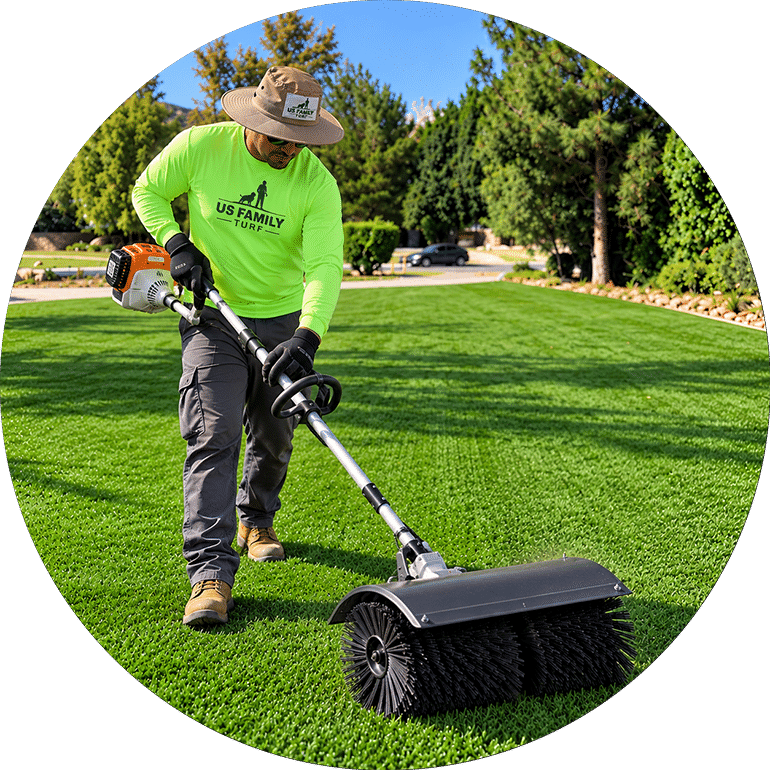
Powered grooming helps lift fibers and loosen debris; the operator still needs to protect seams and infill.
| Task | At home | When professional help adds value |
| Loose debris and flat fibers | Broom, handheld blower or suitable homeowner power brush. | Larger areas, heavy matting or debris caught deeper in the pile. |
| Routine dirt and pet care | Hose, prompt waste removal and a label-directed turf cleaner. | Persistent odor, concentrated contamination or repeated unsuccessful treatment. |
| Infill, seams and drainage | Inspect, photograph and keep accessible drains clear. | Measure infill needs, assess repairs and investigate underlying problems. |
Should you buy a pressure washer or extractor?
Not as your first turf-maintenance purchase. Controlled washing and extraction can be useful for selected deep-cleaning jobs, but the wrong nozzle, distance, pressure or suction can disturb infill or damage vulnerable areas. A carpet extractor is not automatically suitable for every turf installation.
Our deep-cleaning workflow can include controlled washing, extraction and a finishing treatment where appropriate. Extraction recovers some dirty water instead of relying only on rinsing. Recovery tanks and filters need cleaning, and recovered water needs an appropriate disposal route. A collection bag alone does not protect infill or make discharge acceptable.
If you already own specialist equipment, confirm turf and machine compatibility and the approved operating method before using it. Avoid close-range concentrated jets, hot-water or steam treatments unless expressly permitted, and aggressive passes over seams. For ordinary home upkeep, put your effort into consistent basic care first.
A maintenance routine you can actually keep
- After a mess: remove pet waste, pick up food and deal with spills promptly.
- During your weekly yard check: collect leaves and hair, inspect favorite pet spots and look for flattened traffic lanes. Rinse or treat where conditions require it.
- Every few weeks: check seams, edges and drainage; gently groom areas that need it. Dusty weather or frequent pet use may call for more attention.
- Seasonally: inspect the whole installation and review recurring problems. Consider a professional assessment when ordinary care is no longer keeping up.
Also watch for heat damage. Keep hot equipment and grills away from turf, and investigate concentrated window reflections before they damage more fibers. See our guide to preventing sun-reflection damage. Brushing cannot restore melted grass.
Prefer to hand over the bigger clean?
You can do a lot with a broom, a hose and a regular look around the yard. If you’d rather spend that time enjoying it—or you’re dealing with persistent odor, heavy buildup or possible repairs—we can help with the next step.
US Family Turf provides cleaning and maintenance for existing artificial lawns, including turf installed by other companies. Explore our artificial turf cleaning and maintenance in Los Angeles to see service options and book. You can also email info@usfamilyturf.com with photos and a description of the problem.
Keep up the simple care that works for your lawn. Bring in help when you need a deeper clean or someone who understands what is happening underneath the blades.